Friday, February 25, 2011
An Android Tablet To Keep You Buisy

We've been anxiously awaiting the Motorola Xoom's arrival ever since we groped it at CES. The first dual-core tablet! The first tablet to use Android's tablet-only Honeycomb OS! The first Android tablet that doesn't immediately make us think "look at that giant phone"! And, yeah, the first legitimate iPad competitor, period. What we found was a great tablet--not a "promising" product, but a tablet that is seriously fast, fun to use, well-designed, and very pretty (when was the last time you heard "pretty" applied to an Android device?).
What's New
The 10-inch Xoom is both the first tablet to hit stores that runs the Honeycomb version of Android, which Google has designed specifically for larger screens, and the first boasting a dual-core processor (Nvidia's Tegra 2) to handle heaps of tasks at once. (This will become the standard soon; BlackBerry's Playbook and likely the next iPad will also have dual-core processors.) Google has shown off the Xoom as the flagship of this new generation of Android devices: the first true Android tablet, running the first true Android tablet OS.
What's Good
Google Apps: We already knew that Google was pushing panel-based app formatting for Honeycomb, so their suite has to set a strong example (sometimes to its own detriment, but more on that when we talk YouTube later on). When you first open Gmail, for instance, it may look just like it does in iOS, but the experience is much more seamless. In message view, the left-most column of the screen houses a list of items in a folder (say, your inbox), while the right two-thirds displays an expanded, threaded conversation view; if you ask me, the Honeycomb format trounces even web-based Gmail. In both Mail and Gmail accounts, the main folder-view allows you to drag-and-drop messages in and out of folders. The Maps app has a similar layout; instead of imposing a search pane and results over the entire screen (as in cellphone Android), it keeps a list of place entries to the leftmost third of the screen, so you can see a snapshot of the location and its, well, location, side-by-side, just as you would on the web.
Notifications and Settings: Honeycomb has taken the notifications bar from the tippity top of the screen and moved it down to the lower righthand corner. From here, no matter what app you're in, you can see when there's any activity anywhere else on the device. A new Google Talk message, for example, pops up in its own small box alongside a thumbnail image of whoever sent it. The same goes for emails and tweets, though they're accompanied by the app logo, instead of a face, and it's a nice use of the larger screen real estate compared to a smartphone.
Tapping the digital clock opens a full list of notifications, and lets you delete them one by one or as a group. From this window, you can also access all the system settings, something which you (annoyingly) could only do from the homescreen before.
Recent Apps and Multitasking: Beside the virtual Home and Back buttons, which persistently appear at the bottom-left corner of the screen, is the Recent Apps list, which expands into a stack of the last five apps used alongside a thumbnail of the last screen you were on. This column made toggling between apps almost instantaneous; I, for example, hopped quickly between Maps (where I was hunting for a nearby restaurant) and an email--a task which would have taken a healthy amount of double-clicking the home button on an iPad to accomplish.
Widgets: I've always found widgets on smartphone Android to be too overwhelming for the small screen. To get any useful at-a-glance information from, say, your Twitter feed, the widget itself must bogart an entire homescreen. Not so in Honeycomb, which Google has positioned as a champion of widgetry. YouTube thumbnails, my Twitter feed, tiled Web bookmarks, and the native music player all fit comfortably on one pane, saving the time of toggling through apps for recent updates and instead presenting them all at one quick glance.
Keyboard: The on-screen keyboard is as close to a match for the iPad as I've ever used. The keys are well spaced and plenty large. My only complaint would be that the Alt options are only available on a handful of punctuation keys; rather than a long-press on the Q to pull up the numeral 1, you have to switch back and forth between views--a trick Honeycomb should have borrowed from its immediate Android predecessor FroYo, for sure.
Camera: The camera refresh in Honeycomb is long overdue. When using the rear-facing camera, the captured image takes up about two-thirds of the screen, with the image controls remaining handy on the right, letting you adjust white balance, flash, color palate and scene modes without bouncing in and out of pop-up menus. One click (or tap, or whatever) also swaps between the rear-facing five-megapixel sensor and the front-facing two-megapixel sensor.
Tabbed Browsing: Waiting for a Chrome tablet? Here's a worthy substitute. If you know the Chrome browser, you know what's going on here. Honeycomb's web browser is delightfully powerful, a supercharged version of the Android browser that has much more in common with the desktop Chrome browser than Google's previous mobile efforts. You can keep several tabs open simultaneously, including "incognito" tabs that keep your history private. I was sure when I opened the New York Times, CNN, ESPN PopSci.com and others all at once that there would be substantial lag when toggling from window to window, but that was happily not the case. It also syncs with your Chrome bookmarks and automatically logs into the primary Google account on the Xoom, so you can hop right into any Web apps.
Button-less-ness: Google has touted Honeycomb as a button-free experience, which made me skeptical at first (I like the one-click-to-home on the iPad and other iOS devices), but I was quickly proven wrong. In video playback, for one, there's nothing to see but screen; and it only takes a quick tap on the lower or upper edges to pop the navigation and menus back up. The same goes for reading ebooks: ain't nuthin' but the page in front of you. There is one physical key, though, it's just not on the face; in fact, the placement of the power/lock button on the upper-left corner of the device's back is unusual but near-perfectly placed, right where your pointer finger falls when gripping the slab.
Xoom Hardware: Honeycomb aside, the Xoom is the most well-thought-out tablet I've ever tinkered with. Aside from the placement of the lock key ('cause you already know how I feel about that), Motorola has paid plenty of attention to usability and lifespan. While it ships as a 3G and Wifi device, a SIM card slot on the top will allow it to connect to ultra-fast 4G once the Verizon LTE network rolls out later this year. Its memory is also expandable up to 64GB via microSD card (it ships with a hefty 32GB). Its dual-core 1GHz Nvidia Tegra 2 processor is also well up to the challenges presented by multitasking media; I never noticed as much as a blip in any of my playback or load times, and everyday use was buttery smooth.
What's Bad
Too Much Clicking: Honeycomb relies more on the user to do the navigating than iOS does. I found myself endlessly back-clicking in and out of screens (if I left the Gmail app while changing its preferences, hopping back to Gmail from the homescreen or another app would drop me off at the preferences screen, not the inbox), and Honeycomb leaves all the decisions about what to see completely up to the user--something that's especially a drag when trying to play back video.
The most prominent example is the YouTube app: At first glance the Honeycomb YouTube channel blows the iPad out of the water, presenting a circular gallery of the most popular and top-rated clips. Click though into any of those videos, though, and the shine starts to come off the apple; rather than taking advantage of its screen size (and processing oomph) and launching a fullscreen video, Honeycomb's pages instead feel more like YouTube's website; the video is tiled in a three-inch box in the upper-lefthand corner, with metadata below and related links to the right. It takes an extra click to explode into fullscreen, even though that's what most users would want to happen. (It's worth noting that clicking an embedded YouTube video while browsing the web does not show this behavior--the video immediately starts playing in fullscreen.)
I also sometimes found it tricky to figure out how to adjust various settings within apps. There are multiple places where you might find the buttons to let you do things--there's the taskbar at the top of the screen, which changes not only app to app but also within apps depending on what you're doing, but there's also a menu button that pops up on the bottom every once in awhile, and then there's the ability to long-press sometimes but not other times. It never confused me for too long, but there are definitely times when you think, "Now how do I do this...?"
Desktop Sync: There's still a lot about Honeycomb that feels manual next to iOS, with desktop syncing being a perfect example. Despite the refresh to the tablet music interface, the desktop client experience is still clunky, though admittedly easier than previous Android versions. A quick download of the Mac-only Android File Transfer software led to nothing more than a directory of folders living on our Xoom. Syncing libraries then became a long game of drag-and-drop in 4GB chunks. The control of putting files only where you want them is nice, but babysitting it, not as much. We'll admit, we're spoiled by the autonomy iTunes takes on, syncing files on its own in the background. It's likely that third-party solutions, like the media software DoubleTwist, could make this a less manual experience.
Apps: Android tablets need Android tablet apps. Hopefully, that'll come in time, but at the moment, there are precious few apps (and the continued absence of a Netflix app) in the redesigned Honeycomb Android Market that are expressly designed for Honeycomb. Not even major apps like Facebook, Kindle, and Twitter are ready, which makes the platform as a whole feel slightly half-baked. Regular Android apps work on the Xoom, but as any iPad owner who's tried to run an iPhone app will tell you, it's not a particularly fun experience. Smartphone Android apps look zoomed-in and blurry on the Xoom, and require the use of the Menu button that's mandatory on Android phones but has been eliminated from the Xoom. (Luckily, Honeycomb can just add a virtual menu button next to Home and Back, but it's still awkward and inconsistent with the rest of Honeycomb.) It's unfair to brand the Honeycomb app situation "bad," since the thing hadn't even hit the market at time of testing, but it's something about which customers need to be aware.
The Price
$600 with a two-year contract with Verizon ($800 without), which bests the $730 unsubsidized price of a 32GB iPad. Monthly data access starts at $20 for one gigabyte.
The Bottom Line
It's only logical to think that Android converts will feel at home in Honeycomb (rhyme scheme not intentional), but all told, it may do enough to tempt iPad lovers, too. What makes Honeycomb, and thus the Xoom, stand apart from its daunting competitor is its potential to stand on its own. iOS is inherently dependent on having a desktop companion, while Android 3.0 pulls nearly all its info from the cloud. In the one evening I had to spend with the Xoom before posting these impressions, I didn't open my laptop once, nor did I need to. I sat, perched comfortably on the couch, replying to email, coordinating dinner plans, watching videos and reading blogs-all without connecting to a computer. Plus, the microSD expansion slot and easy access to the filesystem, along with the cloud capabilities and multitasking abilities, help make the Xoom feel much more like a possible laptop competitor than the iPad. Whether it can replace a laptop entirely is a question that will take much more time to answer than we had with the Xoom, but it feels more up to the task than the iPad, at least.
Oops Sorry, there are no spaceships left

Instructed by his father, 9-year-old Jose Hernandez marched up to the family television set to wriggle the rabbit-ears antenna, hoping to sharpen the black-and-white image of American men walking on the moon. It was December 1972, during Apollo 17, and Hernandez was transfixed.
"I would go outside, look at the moon, and come back inside and look at the images on TV. I remember being all of 9 years old and telling my parents, ‘That's what I want to do when I grow up,'" he recalled. And he did it. He became an engineer and applied to be an astronaut 12 times before he finally made the cut in 2004. Then he made just one trip to space before hanging up his flight suit for good last month.
It wasn't because he'd realized his dream and moved on. It was because there was nothing in this country for him to fly.
Hernandez could have stayed in the astronaut corps and trained to fly on the International Space Station, but the commitment was just too much. The post-shuttle astronaut training regimen involves six-week jaunts to Japan, Canada, Russia and Europe over two and a half years, and then a six-month stay on the ISS. Hernandez chose to stay in Houston with his wife and five kids.
"I had to make a decision, so I chose for the sake of the family to leave NASA," he said. He said people might have asked why a father of five became an astronaut in the first place, given the arduous training and long absences.
"My answer would be, I didn't expect to be called to Russia," he said.
Including Hernandez, five veteran astronauts have left NASA since August 2010. Linda Godwin and Scott Altman were the first of the wave, departing in August. Godwin retired and Altman went to work for a firm called ASRC Research and Technology. In December, Alan Poindexter left the agency to return to the Naval Postgraduate School in Monterey, Calif., where he will serve as dean of students. And Jan. 3, Marsha Ivins retired.
As NASA prepares for space shuttle Discovery's 39th and final flight today - with just two more shuttle flights left - current and former astronauts wonder whether more of their colleagues will move on, with no prospects of an American spacecraft for many years.
When Leroy Chiao was selected in 1990, leaving the space agency was the last thing he imagined, he said. He attended a retirement party during his first week of astronaut training and couldn't fathom why anyone would walk away. He was 8 when he watched Neil Armstrong step onto the lunar surface, and like Hernandez, he dreamt of becoming an astronaut. But 15 years later, things changed.
Chiao flew on three shuttle missions and once on a Russian Soyuz, after which he commanded the International Space Station for six and a half months. When he got home, he realized he was done.
"Especially after having flown and lived on the ISS, it was kind of like eating a big meal. I was full. It was great, I had a wonderful experience, but it was like, ‘You know what, it's time to go do something else,'" he said. He left NASA in December 2005.
Both Chiao and Hernandez added that they wanted other astronauts to have a chance to fly.
"I didn't feel bad that I was leaving (NASA) in dire straits. I think we have enough astronauts and not enough slots for them to fly," Hernandez said. "In a way I think I'm doing them a favor in alleviating the numbers, and I get to enjoy my family."
Hernandez's class was the last astronaut group that applied with the expectation of flying at least one shuttle mission before the program ended. But the candidates were still asked about their post-shuttle ambitions during the interview process, he recalled.
"We got a call asking would we still be interested in being astronauts if the shuttle program got canceled. In 2004, I said yes, I'm still interested. If I had to train for a station flight, I'm more than willing to do that. But 7 years later, circumstances change," he said.
The class of 2009 was the first group to be chosen without a dedicated spacecraft for them to fly. When the candidates were announced, the Constellation program was slated to begin in 2015, meaning there would be a five-year gap between the shuttle's retirement and the debut of its replacement. Now it's even longer than that, with Constellation relegated to the dustbin and the future of American spaceflight resting on the shoulders of the private sector.
Before he announced the new candidates, Johnson Space Center Director Michael Coats said he had worried the uncertainty would deter astronaut candidates from applying. But NASA still received 3,564 applications from pilots, engineers, scientists and teachers - all of them fully aware they would not fly on the shuttle and would rely on Russian Soyuz craft to get to the space station. The new class is taking intensive Russian language lessons as part of their training.
Hernandez said the new candidates were fully aware when they applied that the shuttle program would be ending soon, and they willingly signed up for space station-based missions.
"But for my class and other classes, it's fair for them to consider whether they want to fly station missions," he said. "I really don't think they're thinking, ‘I'm not going to get a spaceflight‘ - it comes down to a lifestyle. When we trained for a shuttle mission, most of the training, 95 percent of it, was here in Houston. At the end of the day we went back home to our families."
So what do you do next when your resume says "space shuttle trip?"
Chiao struck out on his own, working as a consultant, college professor, motivational speaker and wrangler of twin 4-year-old girls. He also served on the Augustine Commission, tasked with setting a new course for NASA, and which recommended scuttling the Constellation program. He supports developing the Orion vehicle, but he also supports commercial spaceflight development - he's a consultant for private ventures hoping to build their own spacecraft, and he believes he may even return to orbit someday aboard one of them.
Hernandez went to work for MEI Technologies, a Houston-based technology firm that has worked with NASA and with other aerospace companies. He wants to grow the company and serve as a role model to other young Americans, especially Hispanic Americans, he said. His first day was Jan. 31.
Neither expects a mass astronaut exodus, because everyone knew the shuttles had to retire at some point. Transitions between programs are always difficult, Chiao noted - it was hard for the astronaut corps who bridged Apollo to Skylab to the shuttle program, he said. Granted, this is a much longer gap.
"I feel for these guys; they were told they wouldn't fly on the shuttle, they would fly on the next vehicle, and they're watching the shuttle wind down and they have no idea when they're going to fly," Chiao said of the 2009 class. "By timing they can't control, they came in at a time of transition which results in all this uncertainty."
On the other hand, they know they'll get to space somehow, on Russian rockets or privately developed spacecraft.
"If I were one of these guys, would I come to NASA? Probably. My boyhood dream was to become an astronaut," he said.
Now that he's realized that dream and moved on, he's often asked if he misses any of it.
"I think that six and a half month flight was really satisfying," he said. "Of course I miss some of the folks there at NASA. But I don't miss being in space. Yet."
Hey That Is My Orbit

In a cosmic first, the Kepler telescope has discovered two planets sharing the same orbit. There is a theory that says our moon was created when a body sharing our orbit crashed into Earth, but up until now no one had found evidence of co-orbiting planets elsewhere in the universe.
It is possible that such a phenomenon could occur when matter around a newborn star forms into planets. In a planet's orbit around a star, there are two places where a third body can safely orbit. These spots, known as Lagrange points, are 120 degrees in front of and behind whichever body is smaller. The discovered co-orbiting planets, located in the four-planet system KOI-730, are always 120 degrees apart, permanent fixtures in each others' night skies.
Fifty million years after the birth of our solar system, the moon may have formed from the debris of a collision between Earth and a Mars-sized body named Theia. For this to be true, Theia would have to have hit earth at a relatively low speed. Richard Gott and Edward Belbruno of Princeton University say that this could only have happened if Theia had originated in a Lagrange point. The discovery of the KOI-730 planets shows that it is possible.
Maybe someday these co-orbiters will collide and form another moon. But it won't happen for some time, as simulations show that the planets will continue to share their orbit for at least 2.22 million more years.
Wednesday, February 23, 2011
"Millatary Grade" LET ME TEST IT once I get one
If posting has slowed down, then my school has hopped up :)
Thanks to Gizmag
By Ben Coxworth
19:48 February 22, 2011


The Survivor Extreme Duty Case is designed to protect the iPhone 4 and iPod touch, and is built to meet or exceed military endurance standards
Image Gallery (4 images)Put the words "military grade" in front of just about anything, and people – especially guys – will want to buy it. Military grade Post-It Notes, military grade burritos, military grade tube socks, it's all good ... whatever the product, those two words imply that it has been designed to put up with more crap and abuse than its wimpy civilian-grade counterparts. So, when it comes to protecting your precious data-laden iPhone 4, what grade of case do you want? Griffin Technology is assuming your answer to that question is "military," which is what it reportedly offers in the form of its Survivor Extreme Duty Case.


Griffin states that the Survivor has been designed to meet or exceed the endurance standards set by both the US and UK departments of defense. Its shatter-resistant polycarbonate frame and shock-absorbing silicone bumpers allow it to survive drops from up to six feet (1.8 meters) onto a flat concrete surface. A transparent display shield and hinged plugs on all the port and control openings (including the camera lens) keep water, sand, dust and presumably little bits of things that have been blow up from getting inside.
Its clip, when not attached to your belt – or holster – swivels around to act as a stand, propping the phone up in landscape format on flat surfaces.
The Survivor is the first case in Griffin's new Armored collection, and is available via the Griffin or Verizon Wireless websites, or in Verizon's retail stores. There are two versions, one for iPhone 4 and one for the fourth-generation iPod touch, both of which sell for US$49.99. Color choices include black, white, olive, and pink ... military grade pink, we assume.
Friday, February 18, 2011
A supercar For The Future
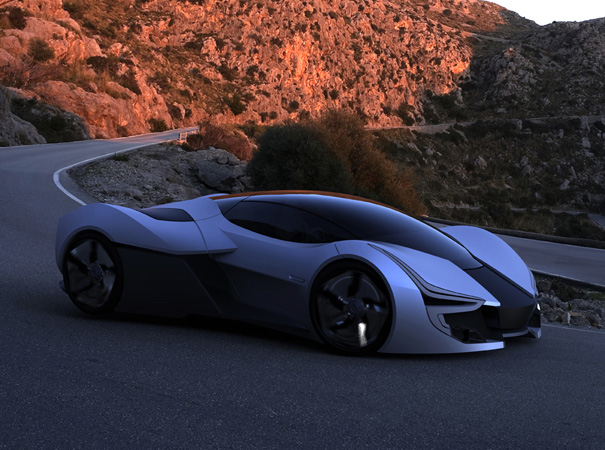
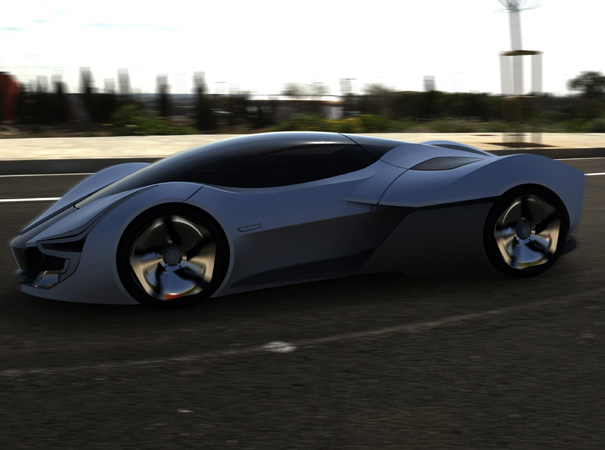
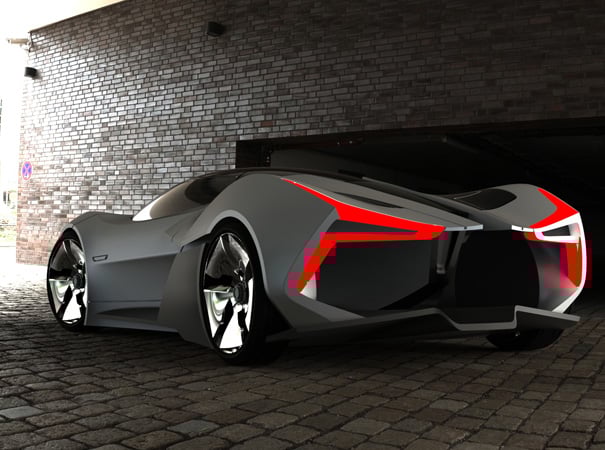
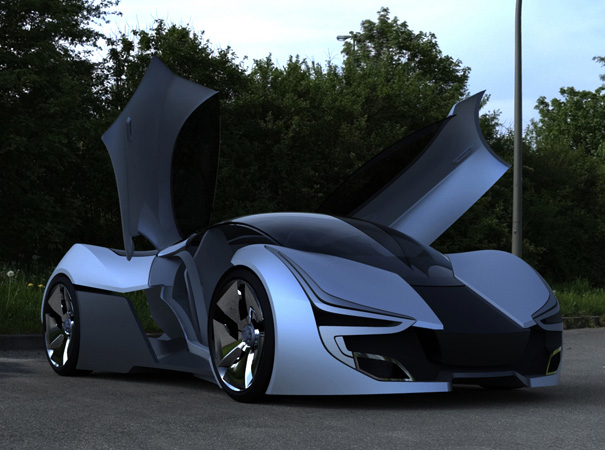
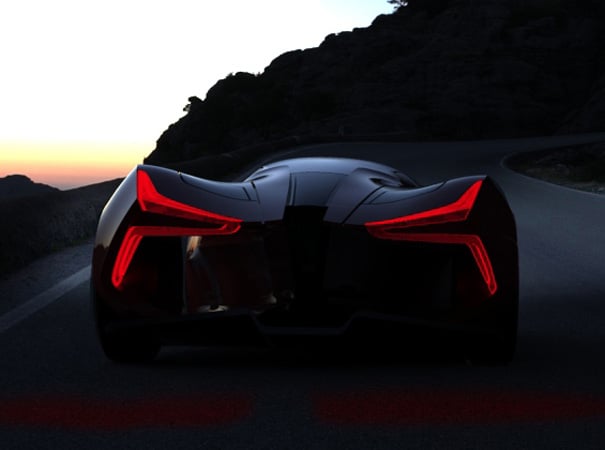
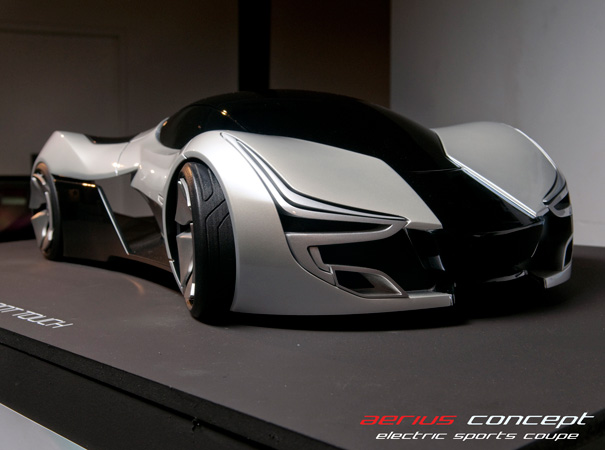
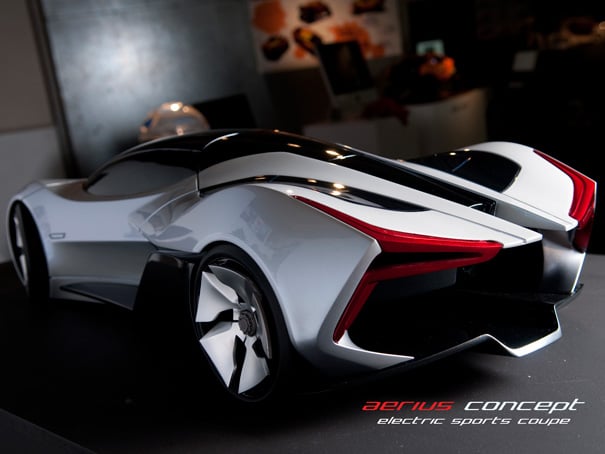
The Aerius concept is a high performance electric vehicle for 2025. The concept is combines the performance of race cars with emerging sustainable energy sources and materials. It’s driven by Michelin Active in-wheel electric motors at the rear and on-board electric motors in the front for instantaneous acceleration and agile handling. The aerodynamic body to reduces energy consumption and solar panels re-charge the carbon nanotube super-capacitors to extend its range while emitting zero carbons. Time travel will cost extra.
The form of the vehicle is heavily influenced by formula 1 race cars. The strong wheel arches hints at the four-wheel drive of the vehicle giving it a strongly planted road stance. The elegant clean glasshouse that runs the length of the vehicle represents the clean purity of the vehicle meaning zero emissions and the diffuser side blade links the whole aesthetic back to race cars.
Designer: Pei-Cheng (Patrick) Hsieh
Wednesday, February 16, 2011
I Wonder If It Had a Valintines on it

Images from the Stardust-NExT mission's Valentine's Day rendezvous with comet Tempel 1 began hitting the Web yesterday--there are 72 total images, but each one took a dial-up-worthy 15 minutes to download--with most of them depicting a grainy rock at a distance. Now NASA is releasing images with a bit more context, showing exactly how Tempel 1 has changed in the six years since NASA bashed Tempel 1 with an 800-pound copper wrecking ball.
The purpose of Stardust's comet flyby--aside from the fact that we rarely get to see comets up close--was to study the surface for clues describing how the comet has changed since we last saw it up close in 2005. At that time, NASA's Deep Impact mission hurled a refrigerator-sized metal missile at the comet, giving them something to study this time around.
The images show that Tempel 1 seems to have eroded over the past six years, likely due to the suns radiation, which would have caused Tempel 1 to shed some material into space. But the crater from Deep Impact looks smoother than might be expected, suggesting that the comet has in some respects healed itself in the intervening years. The cloud of debris kicked up by Deep Impact appears to ahve fallen back to the surface of the comet into a small mound in the center of the 500-foot crater.
Several other regions appear to have transformed in different ways over the years. In one particularly interesting locale, it appears a small amount of material ejected from beneath the comet's surface and flowed downhill, where it is now slowly eroding. As principal investigator Joe Veverka of Cornell University said during a press conference on Monday, this kind of geophysical activity suggests that comets are more than just dirty balls of ice hurtling through space.
The first image below shows before and after images of Tempel 1 taken by Deep Impact in 2005 and Stardust-NExT this week. The second shows Tempel 1's surface at the impact point prior to actual impact in 2005, and then again (on the right) as seen by Stardust. The arrows show the rim of the impact crater.
Talk longer Stronger

Sonim Technologies has announced a new enterprise rugged phone with up to 24 hours talk time and 800 hours standby
Image Gallery (4 images)Get The Info You Need To Stay On Top Of Your Day With A BlackBerry.
Industrial handheld Mobile Solution Atom military IP-65 portable PC
Rugged mobile phone maker Sonim Technologies seems to be on a never-ending mission to create products that can withstand whatever extreme torture can be thrown at them. The company has just announced another tough cookie that's been designed to help enterprise and government organizations locate, track and manage its mobile workforce - whatever conditions they may find themselves in. As well as some impressive tough guy credentials, the XP3300 FORCE also lays claim to the industry's longest talk and stand-by time.


The XP3300 FORCE is a quad band GSM with GPRS and EDGE class 12 data capability and Bluetooth 2.1. It's built on the MediaTek MT6235 ARM-based platform and features an omni-directional, noise-canceling microphone, a 2 megapixel camera with LED flash (which also doubles as a torch), MicroSD slot and an FM radio and media player. It comes pre-installed with the popular Opera Mini browser, a native email client and the City Cruiser turn-by-turn, voice-guided navigation application backed by enterprise-class GPS.
The list of tough credentials starts with IP68-certification, which means it should withstand being plonked 6.5 feet (2 meters) underwater for at least an hour and there's a waterproof vent for 23mm diameter external speaker, which has a claimed max output of 100 dB. The headset and USB ports are similarly water-tight. Its non-porous fiberglass casing, which benefits from a hardened rubber shell dual-injection molded to it, keeps dust and microparticles where they should be - outside. It should also be able to survive a drop from the same height onto concrete.

It's said to work in temperature extremes from -20 degrees C to 55 above freezing, is shock resistant up to 4G and has vibration protection from 5Hz to 500Hz. It benefits from salt, fog, humidity, transport shock and thermal shock protection to MIL-810G certification standards and has spaced input keys to cater for gloved use. The 2-inch, 240 x 320 resolution display sits behind 1.5mm thick, shock and scratch-resistant Corning Gorilla Glass, which is said to be able to stand up to a 4 meter drop hit by a 50g steel ball.
The XP3300 FORCE's 1750 mAh battery is reported to power the device for up to 20 to 24 hours of talk time and a massive 800 hours standby, which is more than enough to cope with the 16-hour shift work that the phone was designed for. Workforce location monitoring, fleet tracking, monitoring, timecard reporting, real-time work order updates, alerts, job scheduling, event confirmation, data collection and reports via MRM applications benefit from 26 hours of GPS tracking functionality.
Although the obligatory tested-to-destruction video attempts have yet to appear, Sonim's Virginia Jamieson told Gizmag that the XP3300 FORCE "is available right now for US$499 unlocked - without a contract. As Carrier deals emerge the price will vary depending on where you buy it."
A Cool Village

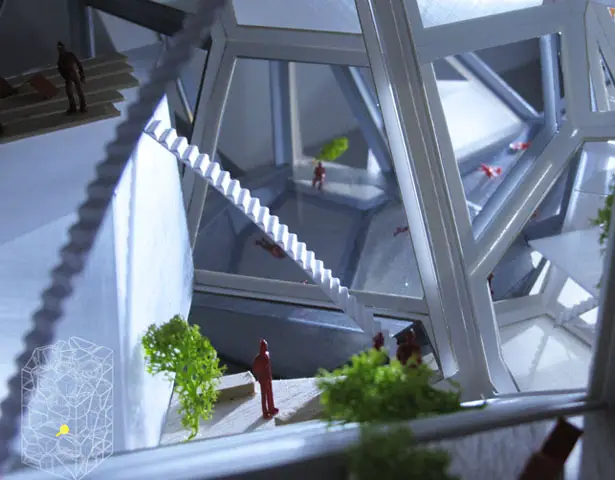
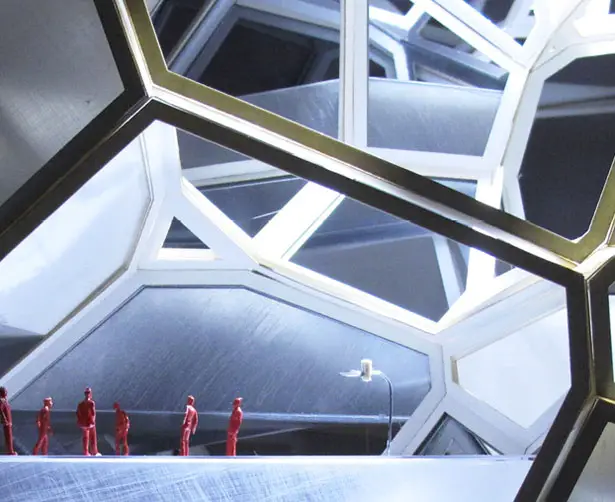
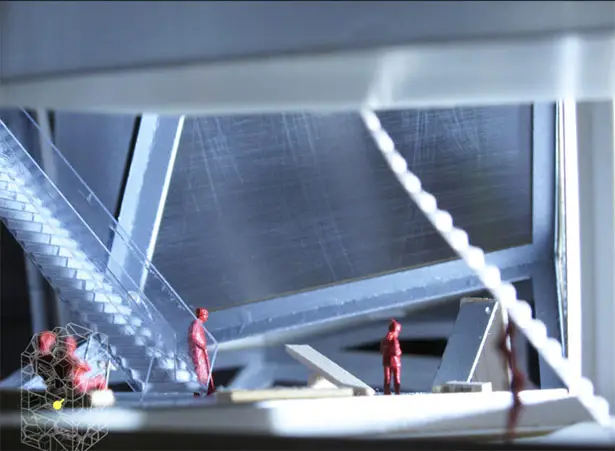
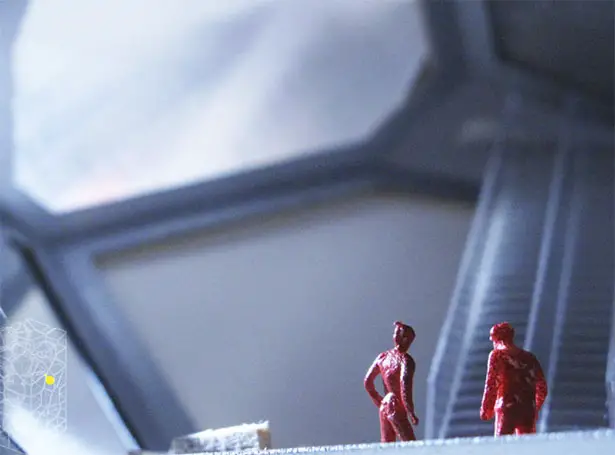
The main focus of designing Vertical Village concept was to enjoy village living without taking a lot of lands that we usually see in traditional villages which can be realized pretty easily with the massive structure of the concept. The houses are envisioned as cells with largest possible usable area both in vertical and horizontal direction, based on their project done in The Why Factory studio of professor Winy Maas, at the TU Delft. The system has defined both practical and dramatic spaces to make a bridge between orthogonal surfaces and irregular zones that may be required by the residents for different purposes. The 3D plots give each family the opportunity to choose where and how they would like to place their house. The circular cell design has made it possible. Finally, the concept will certainly have some positive effect on the massive land crisis mankind is going to experience in near future.
Designers : Rajiv Sewtahal, Yushang Zhang, Riemer Postma, and Qianqian Cai



Lets go Iceskating in our Bently

The world's fastest soft-top - the extreme Bentley Continental Supersports Convertible
Image Gallery (9 images)The New Chevrolet Cruze Is Here! See Why It Beats Hyundai Elantra.
Definitely in the “don’t try this at home” category is Juha Kankkunen’s new 205.48 mph (330.695 km/h) world speed record for driving on ice. Kankkunen drove an all-wheel drive, 6-litre, 12-cylinder Continental Supersports convertible running on biofuel to capture the record on the frozen waters of the Baltic Sea, off the coast of Finland. The world’s fastest soft top enabled Kankkunen to better his own 2007 world ice speed record of 199.83 mph (321.6 km/h) set in the Continental GT at the same location. Not surprisingly, the challenges of driving on a 16.5km track of frozen ocean are many - temperatures as low as minus 30 degrees, sudden snow blizzards and potentially dangerous crosswinds not to mention the frailties of the 70cm-thick layer of sea ice.


“The last time, I narrowly missed the magical 200 mph mark in a Continental GT. When I heard about the Supersports I was determined to go record breaking again with the Bentley Boys. This time, with over 600bhp under the bonnet, a Quickshift transmission and the security of the all-wheel drive system, the Supersports convertible was the perfect car for to go for the record. ” Kankkunen said.
“200mph came up after 5km on sheet ice. Then it was just a question of getting everything right in the timing zone and hoping the snow kept away. There’s nothing to beat driving a Bentley at these speeds; the conditions may be perilous but the car responds so well to the slightest adjustment which gives you the confidence to push even harder.”
As with the previous record-breaking drive in the Continental GT the Anglo-Finnish team used a car with minimum modification. A fully-welded, heavy-duty safety roll-cage, along with Pirelli winter tyres (Pirelli SottoZero II 275/40R20) and a rear bumper-mounted parachute provided reassurance in case of an emergency. Front and rear spoilers provided optimum high speed stability on the treacherous surface. To highlight Bentley’s environmental commitment to sustainable fuel sources, Kankkunen’s Supersports Convertible was fuelled with E85 bioethanol rather than petrol (gasoline). All models in the Continental range are capable of running on petrol (gasoline), E85 bioethanol or any combination of the two.
Wolfgang Dürheimer, Bentley’s new Chairman and Chief Executive, said: “The ice speed record is an amazing feat by Juha Kankkunen, whose skill and courage in extreme conditions truly make him one of the modern-day Bentley Boys. We will be celebrating this achievement with a very special ‘extreme’ Bentley, which will be the most powerful model ever to bear the famed Winged B emblem.” A limited edition of just 100 examples of this most extreme Bentley will be made and the car will make its global debut at the Geneva Motor Show on 1st March.
The record attempt was driven on a 1000m long measured distance with the speed certified by officials from the Finland Traffic Police. His new world record was based on the average of two runs in opposite directions with measured speeds ratified by a representative of The Guinness Book of Records.
Tuesday, February 15, 2011
For When You Need That Boost

The EGO-Kit is an electric motor that can be added to downhill mountain bikes for powering them up to the tops of mountains (Photo: EGO-Kits)
Image Gallery (4 images)Make biking fun again! 123 Frazier Ave. Chattanooga, TN
Looking for Electric Bicycle? Get Your Free Consumer Guide!
We stock all Intense Bikes Buy Online Discounts Available
Discover Honda's innovations in hydrogen fuel cells. Official Site.
While electric commuting bikes are currently experiencing a surge in popularity, electric mountain bikes such as the Conway E-Rider and the KTM eGnition are also showing up on tradeshow floors with increasing frequency. Most of these are designed as cross-country and/or trail bikes, with the idea that the motor can extend their range above the reaches of pure human power – of course, they might also appeal to couch potatoes who want all the fun of mountain biking, with a minimum of the exercise. The EGO-Kit, however, is an electric motor that can be added onto an existing downhill mountain bike, with the specific purpose of replacing a chair lift for getting bike and rider to the top of the mountain.


The high-torque brushless motor puts out 1200W of nominal power, and 2400W maximum. It’s fed by a 48V lithium-iron phosphate battery, that is carried in an included backpack. That battery charges in 1.5 hours, is good for 1,500 loading cycles, and provides a range of 40 kilometers (25 miles) – although that figure depends highly on the grade of the mountain that’s being climbed.
The motor mounts on the bottom of the down tube, near the bottom bracket. This midships low-center-of-gravity configuration is said to have little effect on the bike’s handling. Its output is determined via a control unit and throttle, mounted on the handlebar. All of the gear, excluding the rider-worn battery, has a combined weight of 4.4 kilograms (9.7 lbs).

The kit is reportedly compatible with about 70 percent of downhill mountain bikes currently on the market. Riders can choose between completely forgoing the motor, using it to assist their pedaling, or using it on its own. At maximum output, it can manage a top speed of 70 kph (43 mph). It is also said to be able to handle inclines of up to 80 percent, although that depends on rider skills, motor temperature and soil conditions.
The EGO-Kit can be purchased through the company website for EUR1,870 (about US$2,520), plus shipping from Germany. A 500W version is also available for EUR1,650($2,225). Sales are slated to begin on April 1st ... no joking.
Via Engadget
Cwel Stuff

This time every year, PopSci spends a couple of enjoyable days scouting out the blinkingest, fastest, smartest, most glee-inducing new toys around. Toys, though, ain't just kids' stuff. Here are a dozen new tech-savvy toys even grown-ups can love.
A Airbag for Hikers

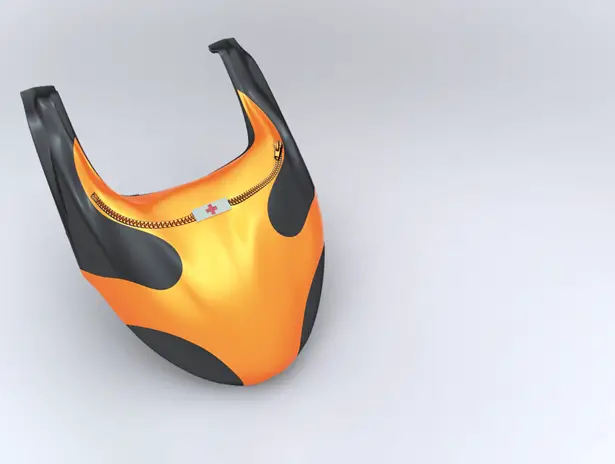
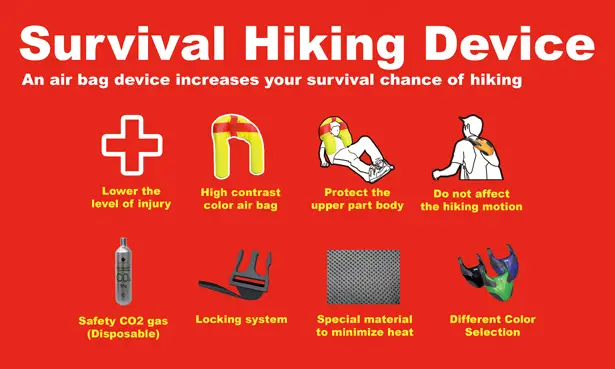
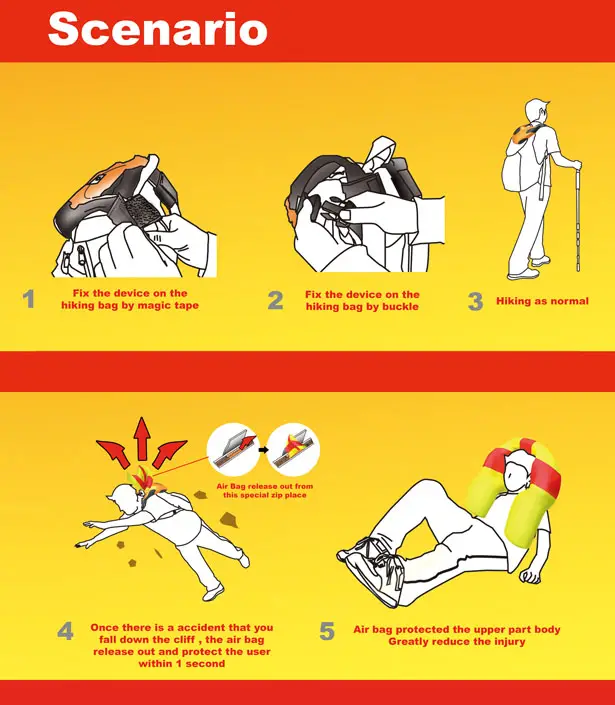
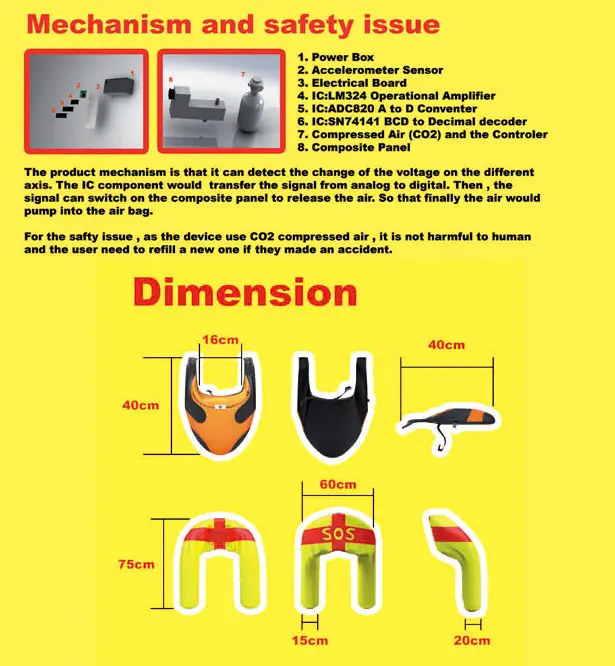
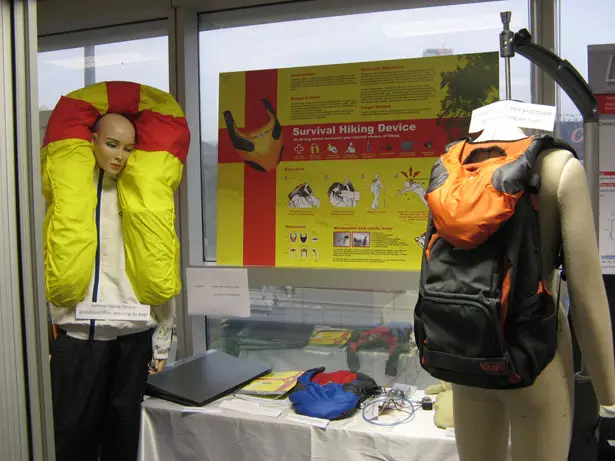
Hiking is becoming a famous out door activity for many people these days. As with any outdoor activity, individuals need to be aware of the potential dangers they might encounter during the process. During hiking, there are high chances of people falling off from the cliff. In such case, this survival hiking kit is very handy to ensure safety. The survival hiking device has been designed in such a way to lower injury levels when the hiker falls down while hiking. The air bag when worn by the hiker will serve its purpose by enveloping the hiker’s body when he falls. This air bag has been designed using high quality materials and attractive color so that it can be easily discovered by others. With an ability to resist 1000N force, the air bag is made of 100% polyester with nylon over the device surface, which is scratch-resistant as well as water-resistant. The mechanism works as expected at the right time, pumping the air into the bag. For safety purpose, compresses CO2 is used, which is not harmful for humans.
Designers : Sam Wong Hok Pan and Lo Man Chun